
Persistent redness
Redness across the central face
Redness may remain visible across the cheeks, nose, chin or forehead and become stronger during a flare.
ClearSkin4u provides consultation-led support for rosacea-prone skin from our Romiley clinic. We focus on skin comfort, barrier support, suitable homecare, trigger awareness and carefully planned treatments without promising a quick cure.
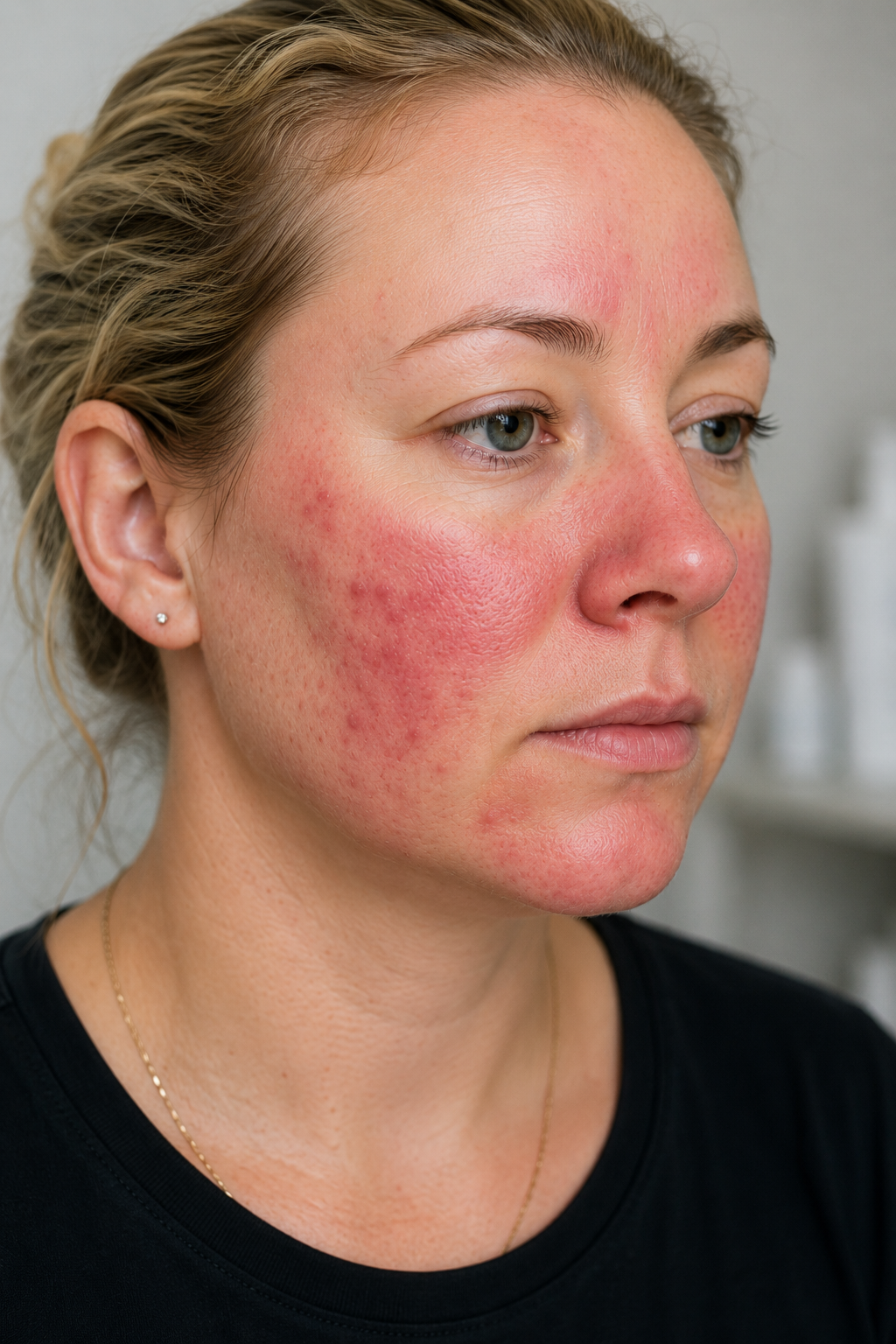
Rosacea is a long-term inflammatory skin condition that mainly affects the face. It can involve persistent redness, flushing, visible blood vessels, sensitivity and spots that may be mistaken for acne.
The way rosacea appears varies from one person to another. Some people mainly experience warmth and flushing, while others develop dry, sore skin, small inflammatory bumps or visible vessels across the cheeks and nose.
ClearSkin4u does not provide a medical diagnosis or prescribe medication. We assess the visible condition of your skin, discuss its history and provide suitable cosmetic skin support. Where symptoms need medical assessment, we will recommend speaking to your GP, pharmacist, optician or dermatologist.
Redness is not always rosacea. Acne, dermatitis, allergies, menopause, medication, sun damage and other conditions can sometimes cause similar changes. Avoid self-diagnosing persistent or worsening symptoms.
You may notice one main concern or a mixture of redness, sensitivity, flushing and inflammatory spots.
Redness may remain visible across the cheeks, nose, chin or forehead and become stronger during a flare.
The face may suddenly feel hot or look more flushed after changes in temperature, stress, exercise, alcohol or another personal trigger.
Rosacea can cause small red bumps and pus-filled spots. These may resemble acne but often need a different approach.
Small blood vessels can become visible, particularly around the cheeks and nose, and may remain even when the skin feels calmer.
Skin may feel tight, itchy, hot, stinging or uncomfortable, especially after unsuitable products or excessive exfoliation.
Rosacea can affect the eyes and eyelids. Grittiness, persistent dryness, sore eyelids, light sensitivity or changes in vision should not be treated as an ordinary facial skin concern.
Rosacea triggers are personal. Keeping a simple record of flare-ups may help identify patterns, but there is no need to remove every possible trigger at once.
Hot rooms, cold weather, warm baths, saunas and sudden temperature changes may affect some people.
Sun exposure can worsen flushing and redness, making suitable daily sun protection an important part of many routines.
Alcohol, hot drinks or spicy food can be relevant for some people, but they are not universal triggers.
Emotional stress, tiredness or anxiety may contribute to flushing and make unpredictable skin feel harder to manage.
Strong exfoliants, fragranced products and combining several active ingredients can increase discomfort in reactive skin.
Trigger awareness should make your routine easier, not more restrictive. We focus on the patterns that appear relevant to your skin rather than giving you a long list of things to avoid.
The first step is understanding what your skin is doing now and reducing unnecessary irritation before considering stronger professional treatment.
We discuss when the redness began, how the skin feels, where symptoms appear and how flare-ups affect your confidence.
We look at cleansers, moisturisers, exfoliants, serums, SPF, prescription products and previous treatments.
The immediate aim may be reducing irritation, simplifying homecare or improving comfort rather than treating every concern at once.
Your plan is adjusted according to how the skin responds. Treatment is not continued blindly when the skin is becoming more reactive.
When the skin feels sore or reactive, adding another exfoliating acid or active serum may make it harder to understand what is helping and what is causing irritation.
Your plan may begin with a simpler cleanser, suitable moisturising support, daily SPF and the temporary removal of products that appear to be causing unnecessary stress.
We aim to create a routine you can follow consistently rather than giving you a long list of products that feels difficult or expensive to maintain.
No professional treatment is automatically suitable simply because someone has facial redness. A consultation and patch testing may be needed before treatment can proceed.
A carefully selected facial may support hydration and skin comfort without relying on aggressive exfoliation or unnecessary stimulation.
The products and techniques used are adapted to the current condition of your skin.
The consultation can help identify product overlap, excessive exfoliation and routines that have become too complicated for sensitive skin.
Homecare recommendations are introduced according to tolerance rather than changing everything at once.
IPL may be considered for suitable persistent redness, flushing and visible superficial vessels. It does not cure rosacea or prevent every future flare.
A consultation, medical screening and patch test are required before a course is recommended.
Microneedling is not presented as a routine treatment for active or inflamed rosacea. It may only be discussed for a separate texture concern once the skin is stable and a full suitability assessment has been completed.
For some clients, it will not be the right option.
"Rosacea support is not about fighting your skin. It is about understanding it and making each next step more carefully."
ClearSkin4u skin philosophy
A cosmetic skin consultation does not replace care from your GP, optician or dermatologist. We will be honest when symptoms fall outside the scope of a skin clinic.
We can support an appropriate skincare routine alongside medical care, but we will not ask you to stop or alter prescribed medication without speaking to the clinician responsible for it.
No. We can discuss the visible condition of your skin, its history and suitable cosmetic support, but we do not provide a medical diagnosis. Your GP or dermatologist should assess symptoms that need diagnosis or prescription treatment.
Rosacea is generally considered a long-term condition. Symptoms can sometimes be controlled and the skin may have calmer periods, but no cosmetic treatment can promise a permanent cure.
Persistent redness, repeated flushing, visible vessels, sensitivity and inflammatory bumps can occur with rosacea, but other conditions may look similar. Medical assessment is appropriate when you are unsure or symptoms are persistent.
Some products can increase dryness, stinging or redness, particularly when several exfoliating or active products are combined. This does not mean every active ingredient is unsuitable, but product choice and frequency need to reflect your skin's tolerance.
No. Triggers vary between people. A simple diary can help identify meaningful patterns without making your diet, exercise or social life unnecessarily restrictive.
IPL may improve the appearance of suitable superficial redness and visible vessels. It does not cure rosacea, and not every skin type or presentation is suitable. Consultation and patch testing are required.
Any treatment can cause a response, particularly when skin is highly reactive. We avoid a standard one-size-fits-all facial and choose products and techniques according to your current skin condition.
It is not treated as a standard solution for active or inflamed rosacea. It may occasionally be considered for a separate concern when the skin is stable, but it will not be suitable for everyone.
Bring a list or photographs of your skincare, details of prescribed products, information about previous treatments and photographs showing how your skin looks during a flare if it is calmer on the day.
Seek medical advice when symptoms are persistent, worsening, painful or affecting your eyes, or when you may need prescription treatment. Sudden changes in vision, significant eye pain or light sensitivity need prompt medical assessment.
Visit ClearSkin4u in Romiley, Stockport for an in-person skin assessment, product review and discussion about suitable treatment options.
View clinic appointmentsAn online consultation can help you review your current routine, identify possible product irritation and understand whether clinic or medical support may be appropriate.
View online availabilitySmall red bumps and pustules can sometimes be confused with acne. Read our acne support in Stockport page to understand how the approaches may differ.
A consultation gives you space to explain what has been happening, review your products and understand which next steps are realistic and appropriate.